Compositions
are you here, with me?
2025
Two harps and electronics
This is my love letter to the Southern Resident Killer Whales of the Pacific Northwest and to all those who fight for their survival and wellbeing. Special thanks to the Orca Behavior Institute for providing sound samples of J-Pod calls used in this piece.
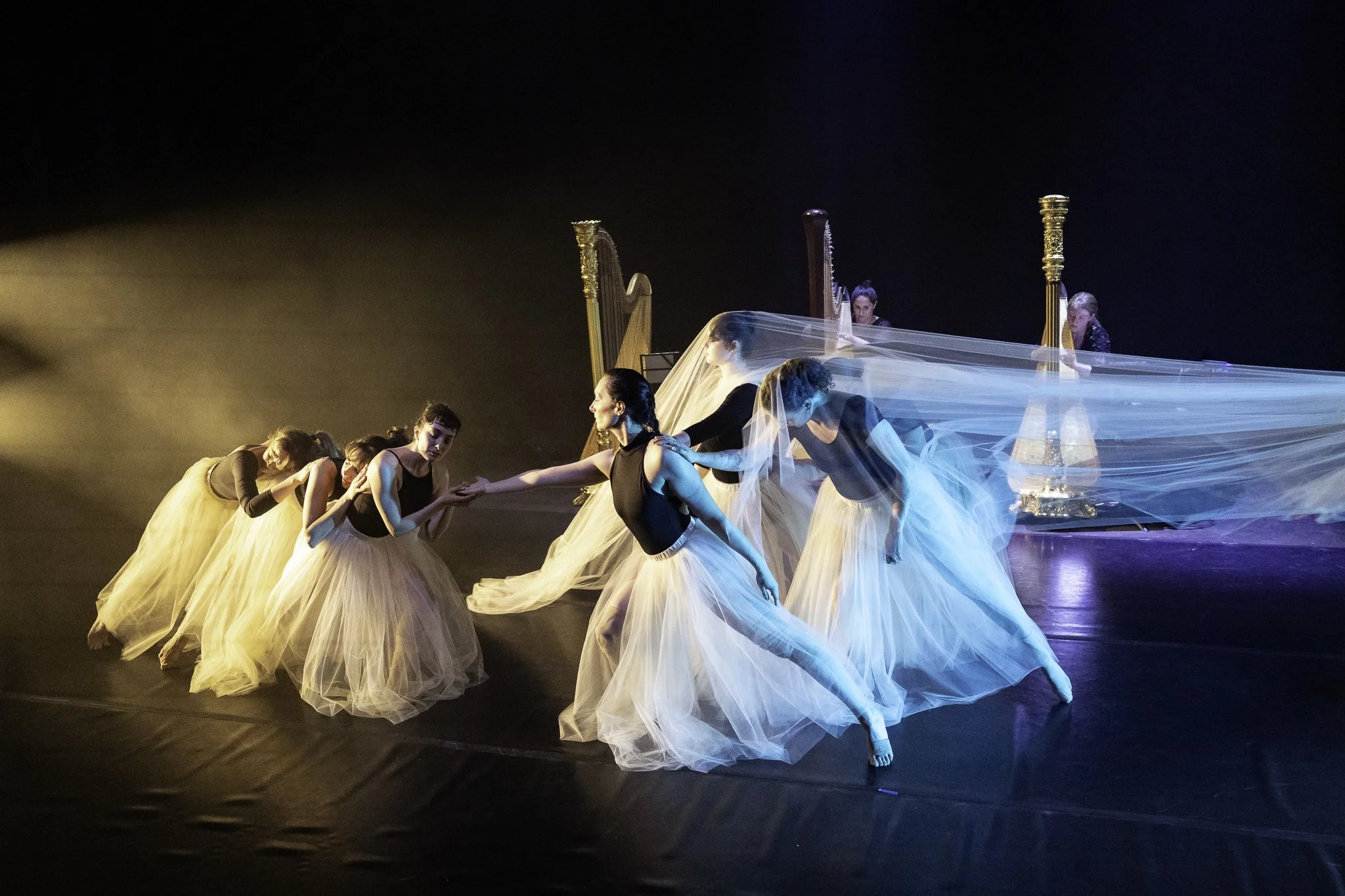
Scored for two harps with electronics, are you here, with me? begins with an eerie sound of wind, produced by slowly sliding across the bass strings of both harps and enhanced by electronic effects (guitar fx pedals). We also hear a distant 5-note call distinct to the J-pod orcas. Out of the depths, an expansive oceanic theme emerges, enveloping the dancers and the audience in reverberant, watery imagery.
This scene is abruptly interrupted by a menacing motif of boat motors under the water and seal bombs used to frighten a large pod of orcas into a corralled bay. Using delay pedals and distortion, the two harps portray both captor and captive, viscerally illustrating the violence of family separation and the grief experienced by another species. Serving as a continuous motif throughout the piece, the J-pod call is heard again, now distorted and confused as the orcas experience captivity in a small, concrete tank. The J-pod call is then transformed into a rhythmically restrictive, unnatural form of communication divorced from its cultural roots and environment.
Finally, there comes reprieve, either through death or through sanctuary. The piece ends with a final word from the J-pod, reharmonized as a question to all of us. Through the lens of interspecies empathy, I encourage both the performers and the listeners to consider the long-lasting impacts of forced and unnatural separation, destruction of community and culture, trauma, and grief.
All My Friends Will Outlive Me
2026
Solo harp, vocal samples, and synthesized track
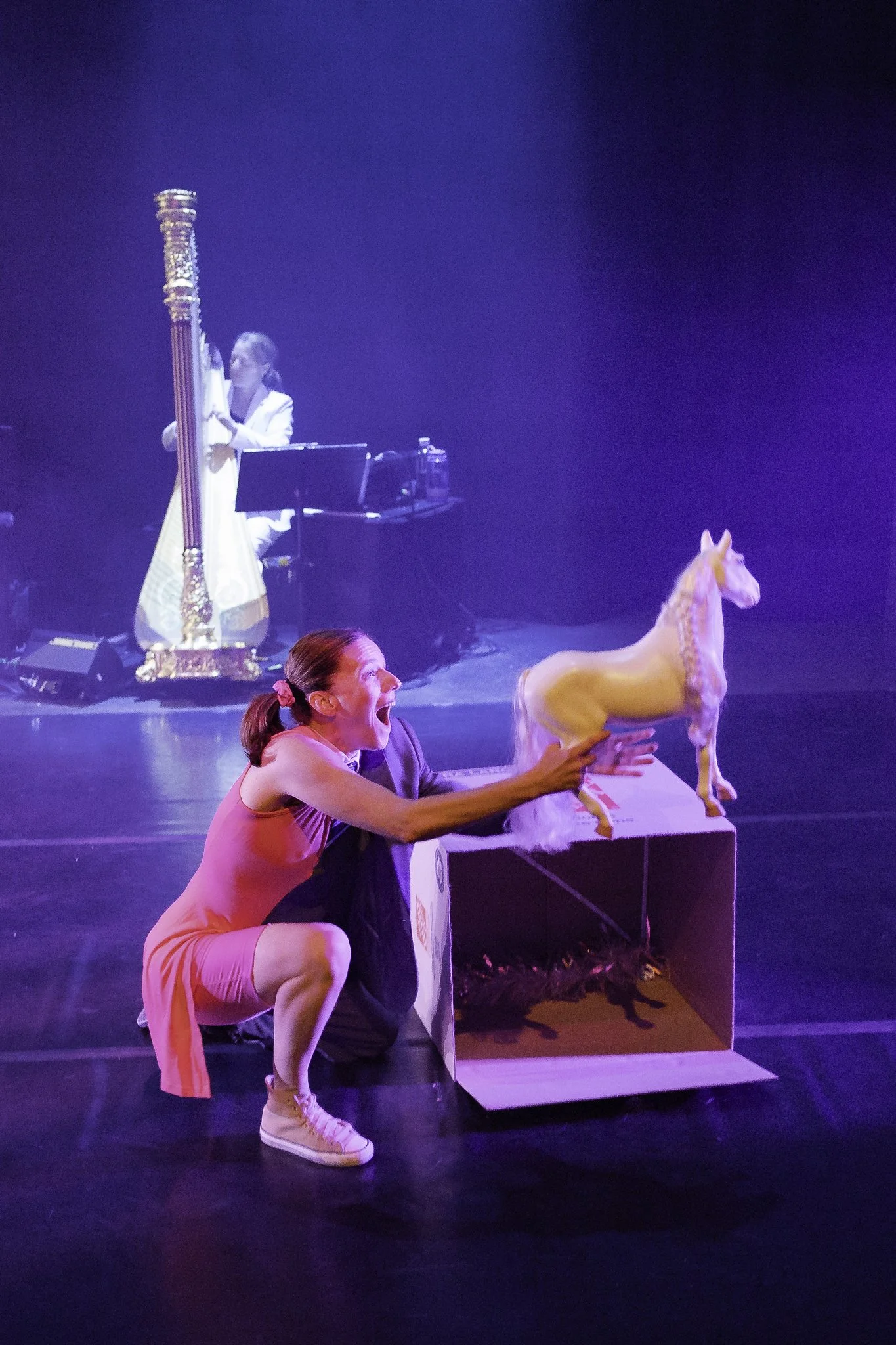
Deeply inspired by American toy commercials of the 80s and 90s, All My Friends Will Outlive Me is an unhinged musical soup of marketing phrases, cheesy chord progressions, and repetitive rhythmic and musical motifs used as if they are monomers chained together to create long, plastic polymers. I used two Vocoder settings on my Arturia MicroFreak synthesizer to add robotic pronunciations of plastic names, like polyvinyl chloride, biaxially oriented polyethylene terephthalate (Mylar), and polytetrafluoroethylene (Teflon). You'll also hear Bakelite and its chemical name, phenol-formaldehyde. Bakelite was the world's first synthetic plastic product, created by Leo Baekeland in 1907.
When I was listening to the original commercials, I realized that the harp is used constantly to create dreamy, magical soundscapes. In my heavily synthesized work, the live harp takes the role of the liar (pun intended with lyre!), adding a fun counterpoint to the menacing Toys R Us Oil Monster sections. As a child of the 80s and 90s, I cannot separate my fondest memories with my best friend, Elizabeth, from the plastic toys that defined our experience. While the harp is the liar in my piece, it also advocates for the nostalgia of the toys in the penultimate section, like a final plea for those childhood memories. We are left to contemplate the nuances of plastic, which has served to help and to harm our fragile world and our physical bodies.
Light As…
2025
Solo harp
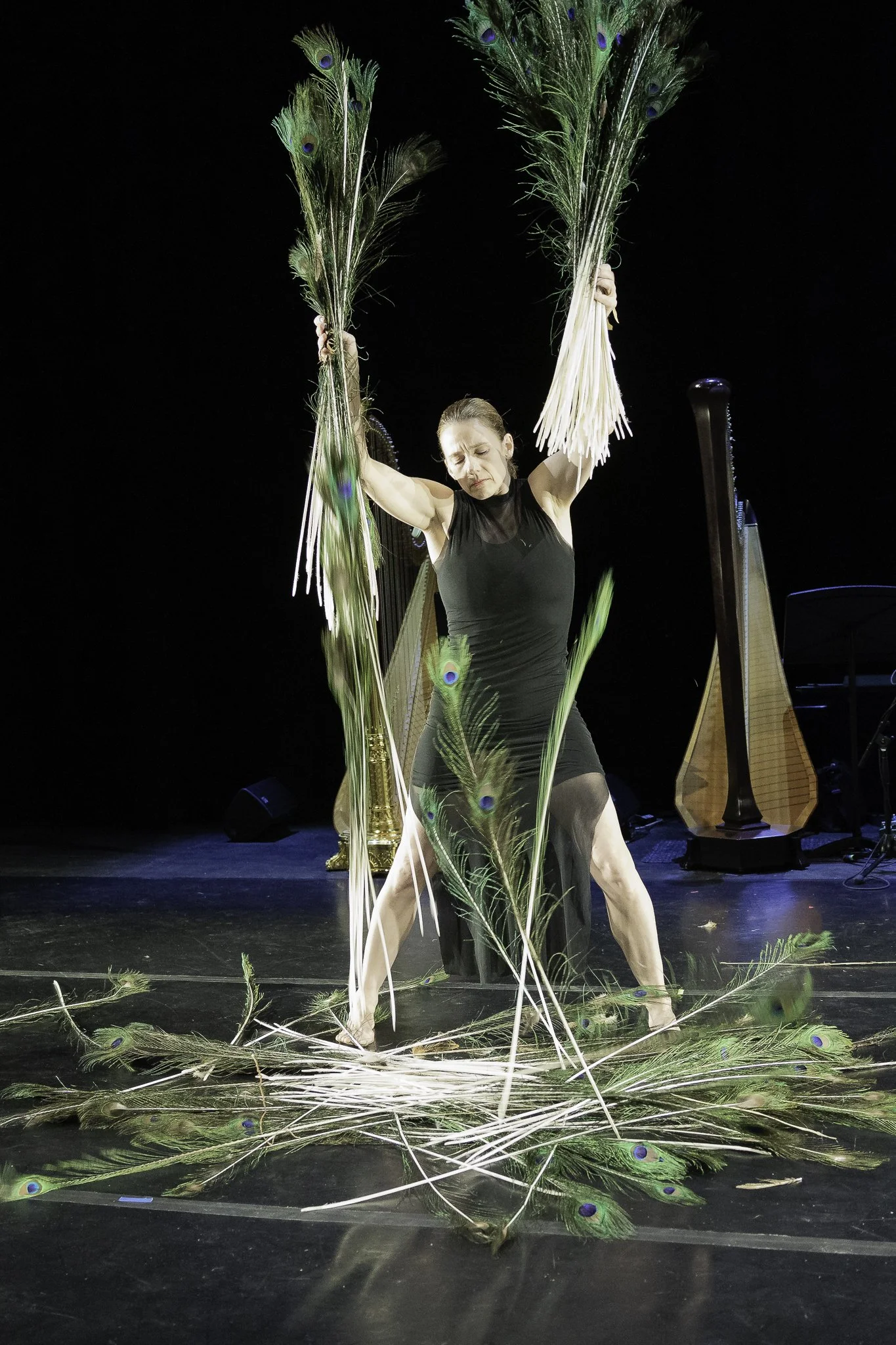
Light As... was inspired by choreography originally set by Autumn Eckman to the Adagio from J.S. Bach’s Concerto in D Minor, BWV 974. I wanted to experiment with writing music entirely informed by movement, so I muted the original music and studied her dance, without sound, for months. On December 30, 2025, I woke up hearing a melody and seeing her choreography in my mind. Early that morning, I recorded a 5-minute improvisation, imagining her movement, and that material became this piece.
As a harpist and former dancer, I feel very connected to movement through my music. I often feel that I need a fusion of art forms to express difficult emotions. I am grateful for the powerful channel that is my artistic connection with Autumn, which began at the University of Arizona in 2018.
This piece is a meditation on a statement by author Rebecca Giggs:
“Killing a species is ending a kind of consciousness.”
May we become more conscious of and caring for the fragility of all life.